New Zealand
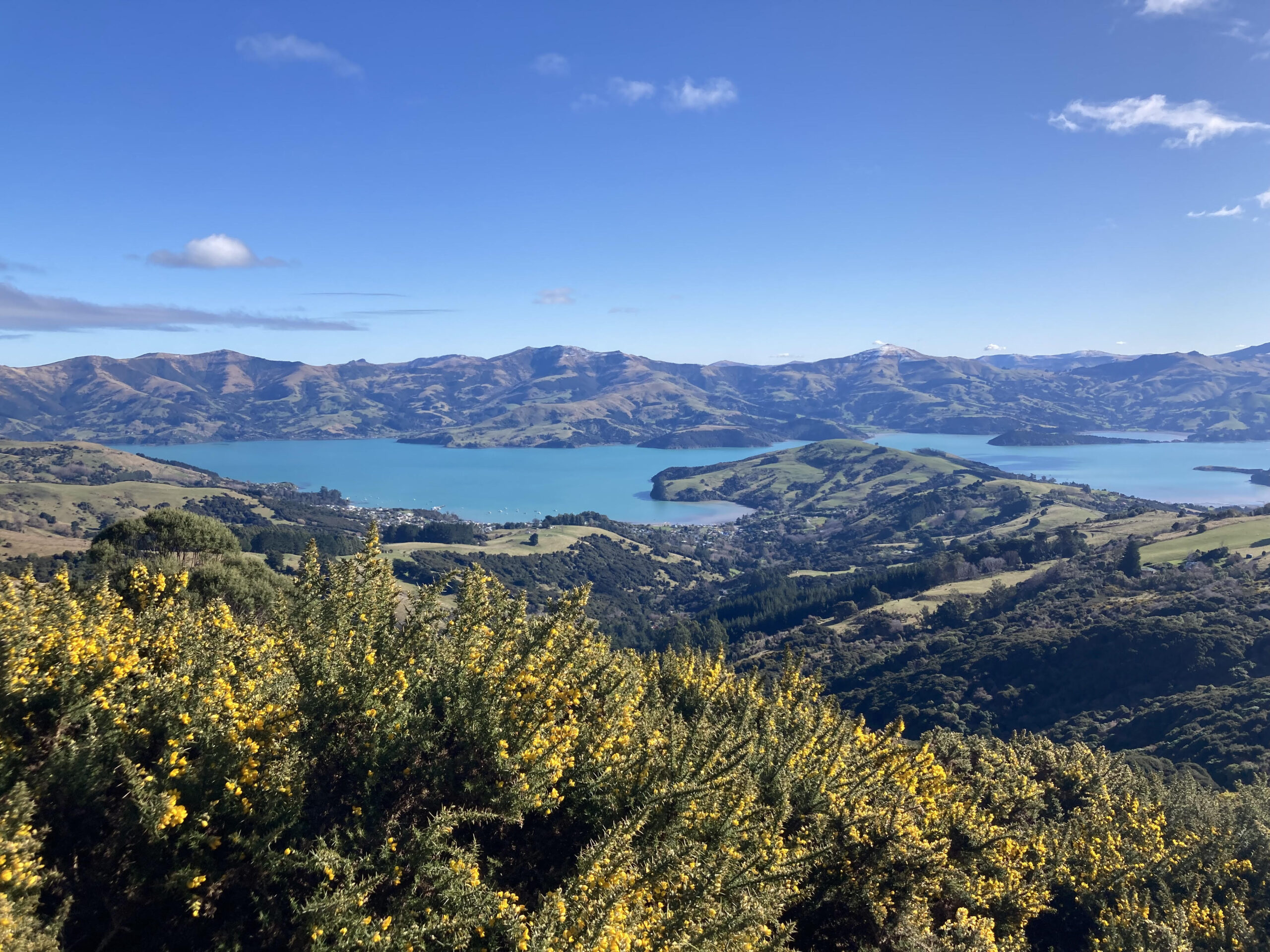
Part of the Carbon in Global Boreal and Alpine Soils Under Climate Change-Driven Land Use fellowship sampling.
New Zealand
Soils were collected from two distinct locations on the South Island: farms in the Canterbury Plains west of Christchurch (pasture and wheat), and the Hinewai Reserve on the Akaroa Peninsula south of Christchurch (converted and native forest). Additional samples were donated by Dr. Paul Mudge (Landcare Research, Hamilton) from his published North Island volcanic-soil chronosequence project.
Canterbury farms (Phoenix Farm and Lill Farm) were sampled for Pasture (grazed) and Wheat. The locations were mostly flat and irrigated on similar soils, with roads sometimes running between pasture and wheat fields; pasture appeared to be Italian ryegrass.
Hinewai was sampled for Natural (old-growth kanuka forest) and partly abandoned Pasture (converted forest). It sits at the top of an old volcanic caldera; samples were taken from relatively flat sections. Forest was about 140 years old and centered on the kanuka tree. Soil texture was a Templeton silty loam (Canterbury) and a firm brown Akaroa yellow-brown loess (Hinewai) over volcanic material; North Island samples were volcanic Taupo Pumice. The Hinewai Reserve, led by Hugh Wilson, has worked for thirty years on regenerating forest, specializing in transitioning pasture to gorse to forest. Sampling was performed within a single day at each location and refrigerated immediately.