Quebec
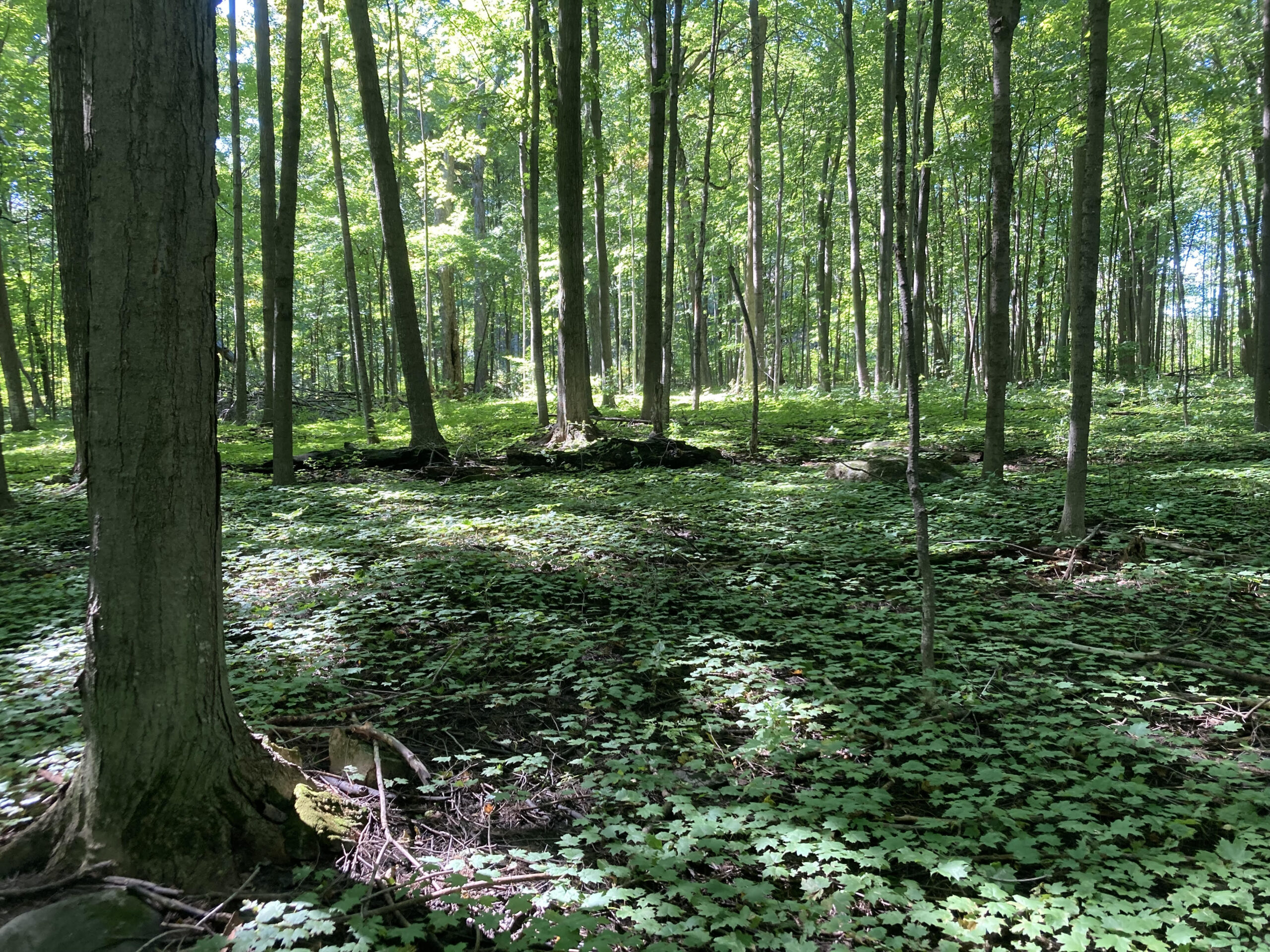
Part of the Carbon in Global Boreal and Alpine Soils Under Climate Change-Driven Land Use fellowship sampling.
Quebec
Soils were collected at the Morgan Arboretum of McGill University (Macdonald Campus), near Montreal, Quebec, chosen due to the end of the season and the distance to farms. Samples focused on species-related effects and chronosequences and included 200-year-old maple, 200-year maple cut and replanted as maple (20 years old), 60-year black walnut, 60-year larch, 60-year cedar, 60-year wild pasture (unmowed), and 60-year arable land.
The land had minor variable elevation with streams criss-crossing it but was mostly flat in the sampled areas. Forest was mature, with limited understorey growth; the unmowed pasture had a diverse mixture of grasses and forbs and served as a refuge for endangered ground-nesting birds and insects. Sample texture appeared high in clay, possibly a clay loam, suggesting river-bottom clay given the proximity to the Lac des Deux Montagnes. The Arboretum director noted the land had been converted to agriculture over a century ago but abandoned due to difficulty in working the soil. Samples were taken in one day, refrigerated, and dried almost immediately.