Ireland
Part of the Carbon in Global Boreal and Alpine Soils Under Climate Change-Driven Land Use fellowship sampling.
Teagasc, Ireland
Two Teagasc sites were used (Johnston Castle and Oak Park) due to the regionalization of agriculture in Ireland: Johnston Castle is primarily pasture research and Oak Park is primarily grain crops.
Oak Park had sites for Pasture, Wheat, and Natural (forest) replicates. It was flat with no obvious water sources and grew maize, wheat, barley, and canola/rapeseed. The forest was a mixture of bramble/briar deciduous with a surprising amount of ground ivy, plus an area of mature conifer. Pasture was grazed occasionally and lush.
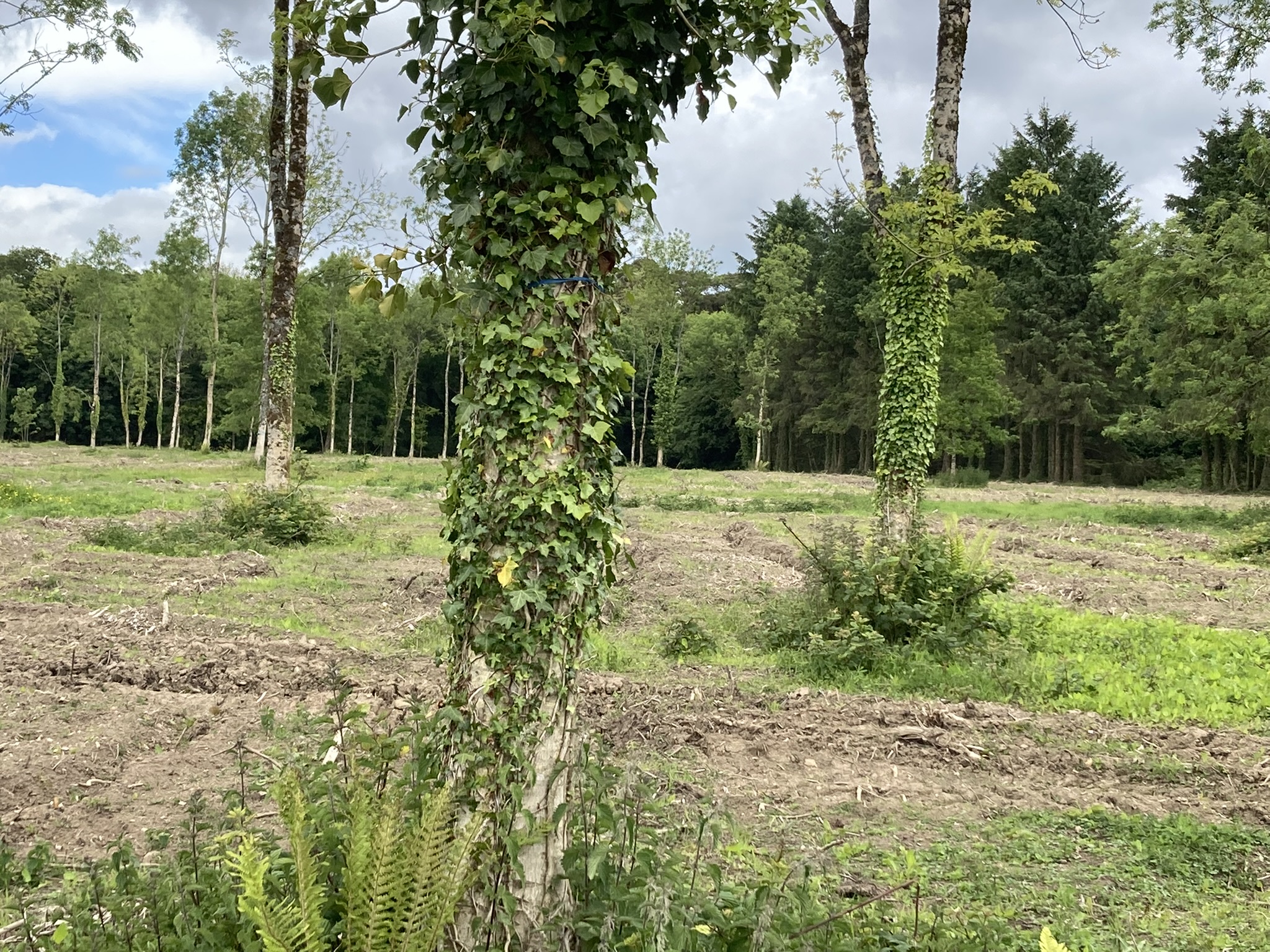
Johnston Castle had sites for Pasture, Natural (forest), Abandoned (agroforestry Ash), and Converted (former Ash). It had rolling terrain with small valleys and local ponds (artificial and natural) criss-crossing the forest. The forest appeared mature deciduous but mostly litter forest floor. Pasture was on a long slope immediately below the converted plots and had been recently grazed by cattle.
The agroforestry (Ash) site had been a full Ash plantation, similar to Leeds, until four months prior to sampling, at which point blighted Ash were cut down and shredded (similar to land conversion). Some disease-resistant Ash were left intact, allowing sampling of sparse agroforestry plots that still contained ferns and other forest plants at the tree bases. Converted soil was very loose and contained wood shavings/chips from conversion. All soil from both locations appeared to be of similar geologic origin (dark grey hue). Sampling was performed over two days (one at each site); samples were refrigerated then processed.