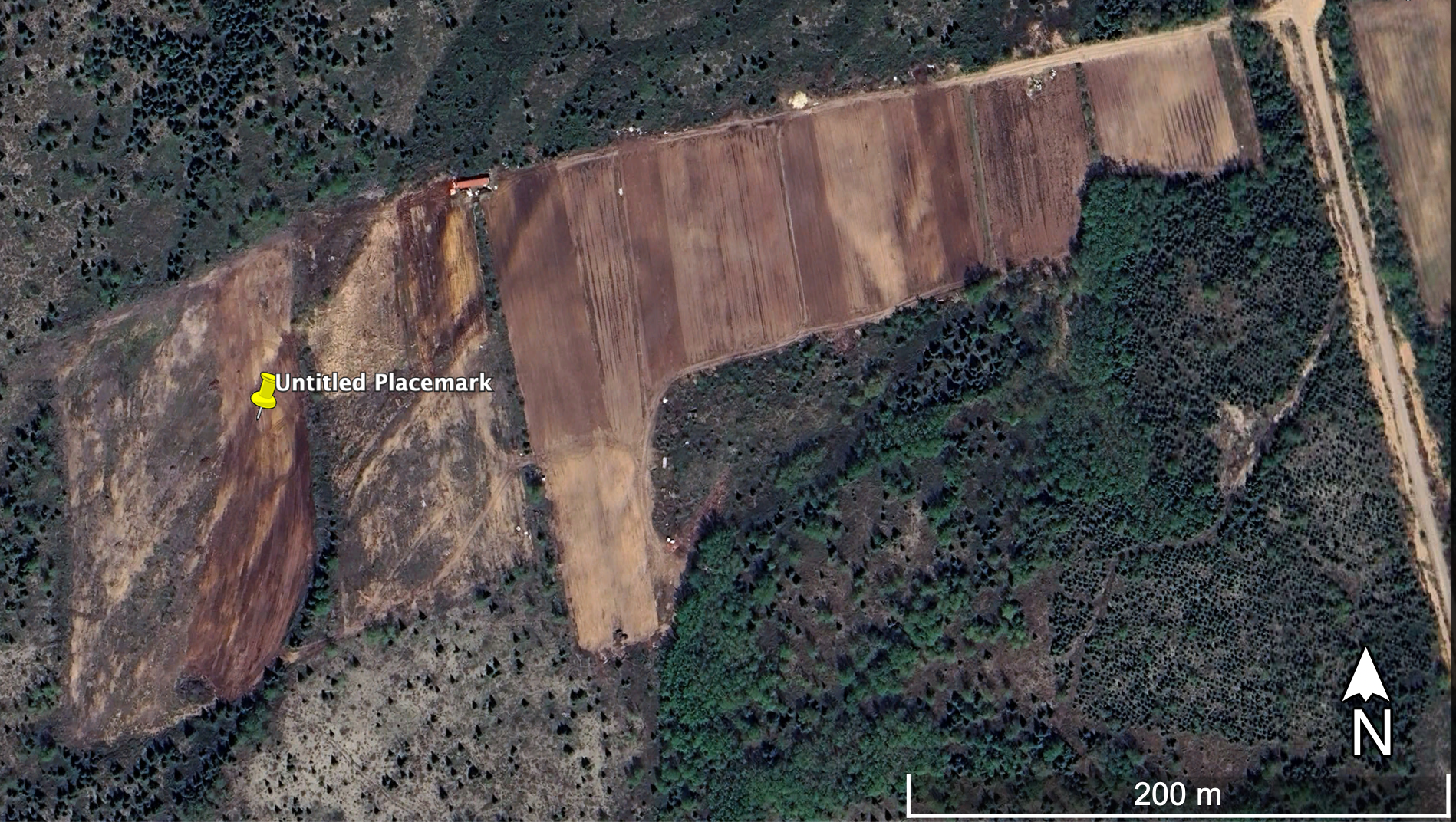
Nature's Best Farm has been operating in Central Labrador since 2010, providing locally grown pesticide-free foods to consumers throughout Labrador. The organization supplies produce to large retailers, community groups, school lunch programs, restaurants and open markets (in season). Produce is typically sown on 5 acres of land in mid June and harvested by November using a combination of farm technology and sustainable land practices.
The farm, owned and operated by Mr. Desmond Sellars, is located east of Happy Valley-Goose Bay, Labrador, on historical alluvial deposits of the Churchill River. The soil has developed under standard podzolization and reflects the available organic matter (dominantly Humo-Ferric Podzols). The farm has been converted from forest to agricultural land use mainly over the last 14 years (as of 2024). The farm is focused on the production of leaf and root vegetables under various rotations. Fertilization is organic, utilizing locally available materials including fishery waste. Practices follow organic and ecological rules with non-chemical weed and pest control practices.
Project: BioSoil North
Three experimental blocks have been established on the westernmost portion of the farm; the site was converted from forest to agricultural use in 2017/2018. Forest biomass was partially mulched and left on the surface together with a significant proportion of the LFH horizon. The land was then left fallow until ploughed for the experiment in 2023.
Factors:
- Crop: oat, pea or oat-pea mix
- Fertilizer: none, mineral fertilizer, shrimp compost, shrimp waste (untreated)
- Amendment: none, lime, lime and peat
- A no-crop, no-fertilizer, no-amendment treatment is included in each block
- Reference sampling from adjacent natural areas, as relevant to the tested hypothesis
Project: Soil fertility and biochar
The study site is representative of the agricultural soil found in Happy Valley-Goose Bay, Labrador. It was in the southern portion of Lot 5 (53 19' 10.98" N, 60 14' 18.98" W) and owned by Mr. Des Sellars. The soil is a homogeneous Humo-Ferric Podzol on a flat topography, developed by clearing the boreal forest. The site was prepared in the fall of 2012 by clearing and removing large trees and incorporating shrub canopy and surface organic materials directly into the top 30 cm. Limestone was added at a rate of 2.5 Mg/ha to raise the soil pH in preparation for growing crops in 2013.
Related research output
- Young EH, Abedin J, Unc A. 2023. Soil nematode communities after addition of biochar to agricultural farmland following conversion from boreal forest. Soil Research (CSIRO) 61(5): 456-467.
- Abedin J, Unc A. 2023. The rate-dependent efficacy of biochar for crop yield and nutrition on Podzols newly converted from boreal forests. Field Crops Research 303: 109121.
- Abedin J, Unc A. 2021. The utility of biochar for increasing the fertility of new agricultural lands converted from boreal forests. Canadian Journal of Soil Science 102(1): 165-176.
- Abedin J, Unc A. 2020. Addition of biochar to acid, boreal podzolic soils enhances micronutrient availability and crop productivity. Open Agriculture 5(1): 188-201.
- Altdorff D, Galagedara L, Abedin J, Unc A. 2019. Effect of biochar application rates on the hydraulic properties of an agricultural-use boreal Podzol. Soil Systems 3:53.
- Abedin J. 2018. Enhancing soils of Labrador through application of biochar, fishmeal, and chemical fertilizer. Agronomy Journal 110(6): 2576-2586.
Related projects
Sources
- Nature's Best Farm (NL farm guide)
- Young et al. 2023, Soil Research 61(5): 456-467
- Abedin & Unc 2023, Field Crops Research 303: 109121
- Abedin & Unc 2021, Canadian Journal of Soil Science 102(1): 165-176
- Abedin & Unc 2020, Open Agriculture 5(1): 188-201
- Altdorff et al. 2019, Soil Systems 3:53
- Abedin 2018, Agronomy Journal 110(6): 2576-2586