Soil fertility and management
Establishing the knowledge base
For farming to expand northward – and be carried out sustainably and adaptively – one must first well define the physical, chemical and biological context of the soil systems, and integrate the realities of locally relevant resources to establish the knowledge base for informed development of northern cropping. Locally relevant solutions include the use of biochar, crushed rock, and the re-use of diverse organic-waste streams (including fishery wastes); for the latter, a main focus of the work is to contrast conventional and non-conventional means to maximize utility while reducing management steps – and thus costs. Adoption depends critically on the adaptability and accessibility of the proposed solution. Local knowledge is central to all assessments, and most of the work is carried out on farmers’ fields.
Nitrogen in boreal acid soils
In a natural state, a forested Podzol has a relatively tight nitrogen cycle, where nitrate and ammonia are taken up by plants at rates matching mineralization, with very little leaching. When land is converted from a natural state, increases in temperature and oxygen result in an increased mineralization rate through enhanced microbial activity. Nitrogen in a Podzol can be associated with carbon – the largest pools are found in dead, decaying matter, while smaller pools involve dissolved total nitrogen associated with dissolved organic carbon in illuvial layers. To adequately understand the drivers of the biogeochemical cycles, it is important to look at how the mechanisms of mineralization and immobilization are influenced by the soil’s parameters.
Phosphorus in boreal acid soils
In a Podzol, organic phosphorus can be assumed to be about 4% of the total P, with the remaining 96% inorganic. Phosphorus is available to plants as phosphate ions, taken up directly through roots and hyphae via mycorrhizal associations; organic phosphorus becomes available after mineralization, usually carried out by soil microorganisms. Mineralization mediates the availability of common soil organic-P compounds such as inositol hexaphosphate, lecithin, nucleic acids, nucleotides and glycerophosphate.
Overall availability ultimately relies on the P stores in the soil. A soil with low P-retention capacity makes added P highly available; conversely, soils with high P-retention capacity limit availability – which also affects availability to the soil microorganisms that mineralize organic P. Phosphate ions are very reactive and form insoluble complexes with metallic cations including iron and aluminium. Nevertheless, under natural conditions P reaches soils mainly in organic forms, whose greater mobility (compared with inorganic P) makes the organic fraction of particular interest. The combination of metallic cations and low pH shapes the form of inorganic phosphorus through immobilization, making P availability a key concern when converting land to agriculture.
Locally relevant fertilizer sources
Significant amounts of organic materials are commonly added to enhance the fertility of newly converted boreal lands. Assessing the organic-waste streams across Newfoundland, we found that wastes contain sufficient nutrients to cover between 50 and 100% of the nitrogen and phosphorus fertilizer required at the current intensity of agricultural production.
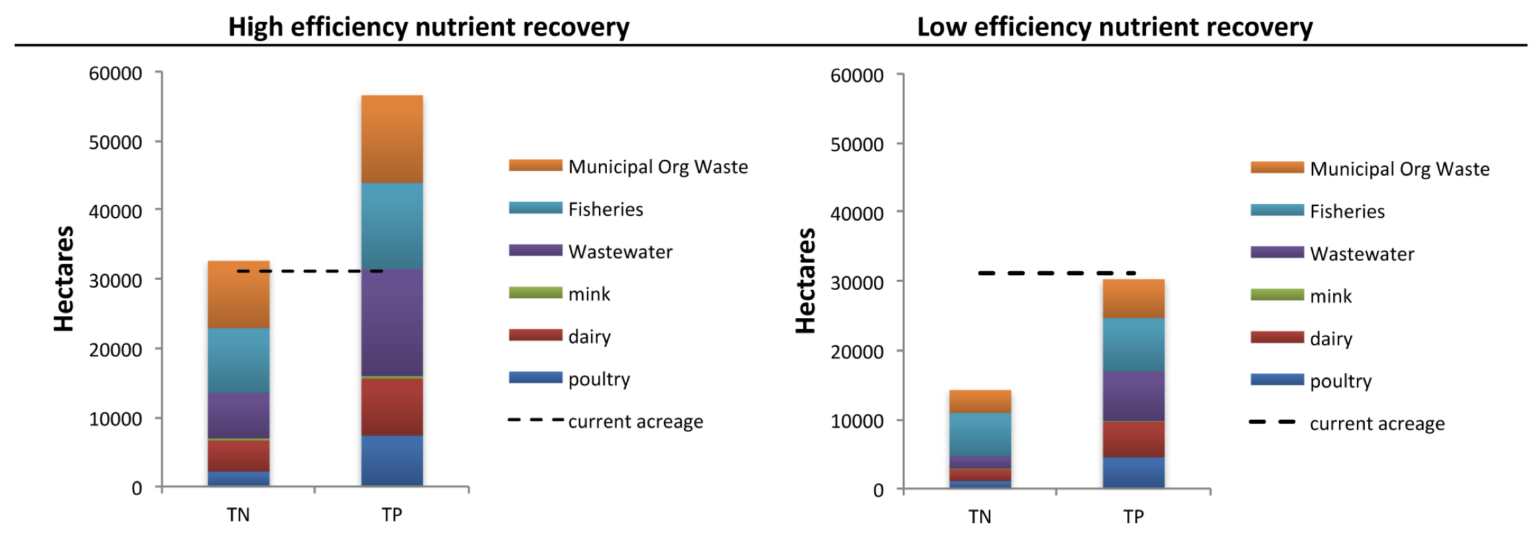
There is a need to understand how the soil layers that are variably mixed during land-use conversion – and thus variably contribute to the new plough layer – respond to the addition of locally relevant fertilizers. This affects agronomic management and the general capacity of new farmlands to sustain agriculture. Given the current push to expand northern agriculture, it is essential to understand how conversion affects soil biogeochemistry, and thus the chemical speciation and fluxes of plant-essential nutrients.
Best management practices: the need for local calibration
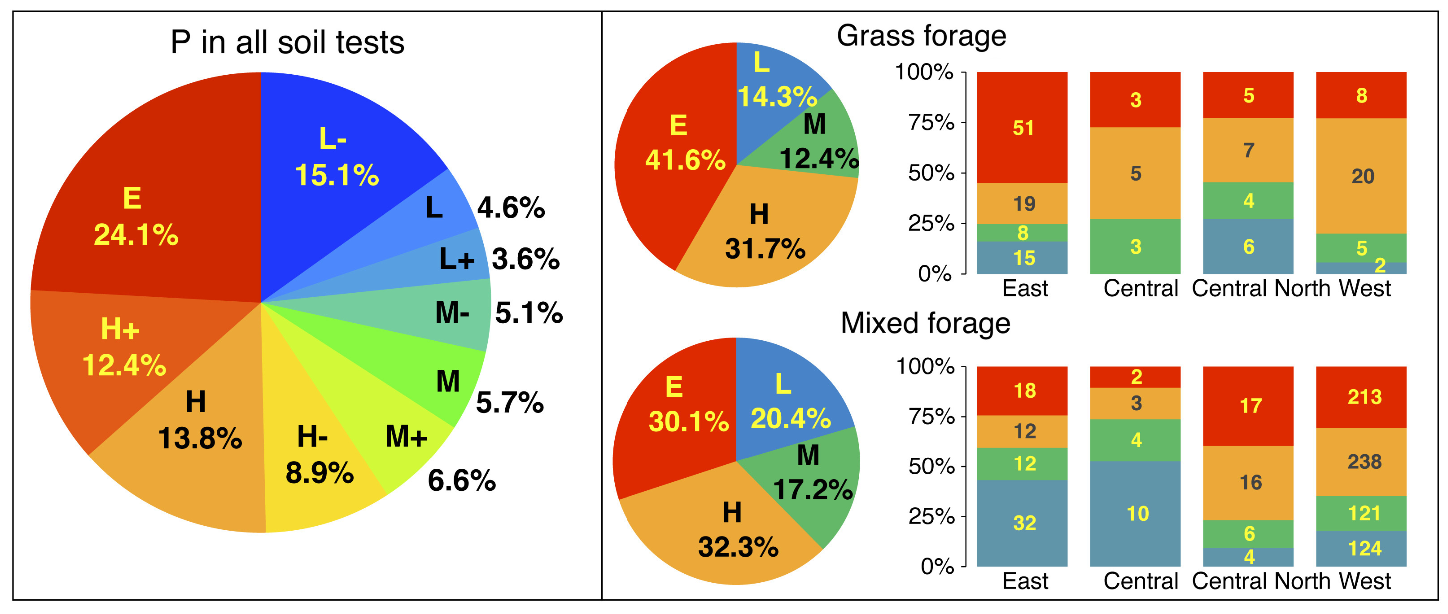
Fertilizer recommendations must be locally calibrated. Podzols have a strong capacity to specifically adsorb phosphorus onto iron and aluminium oxides, which may lead to precautionary over-application of phosphorus – but that can rapidly cause excessive availability as soon as the soil’s storage capacity for phosphorus is satisfied.